Standardising checkout patterns across Jupiter payments
Standardising checkout patterns across Jupiter payments
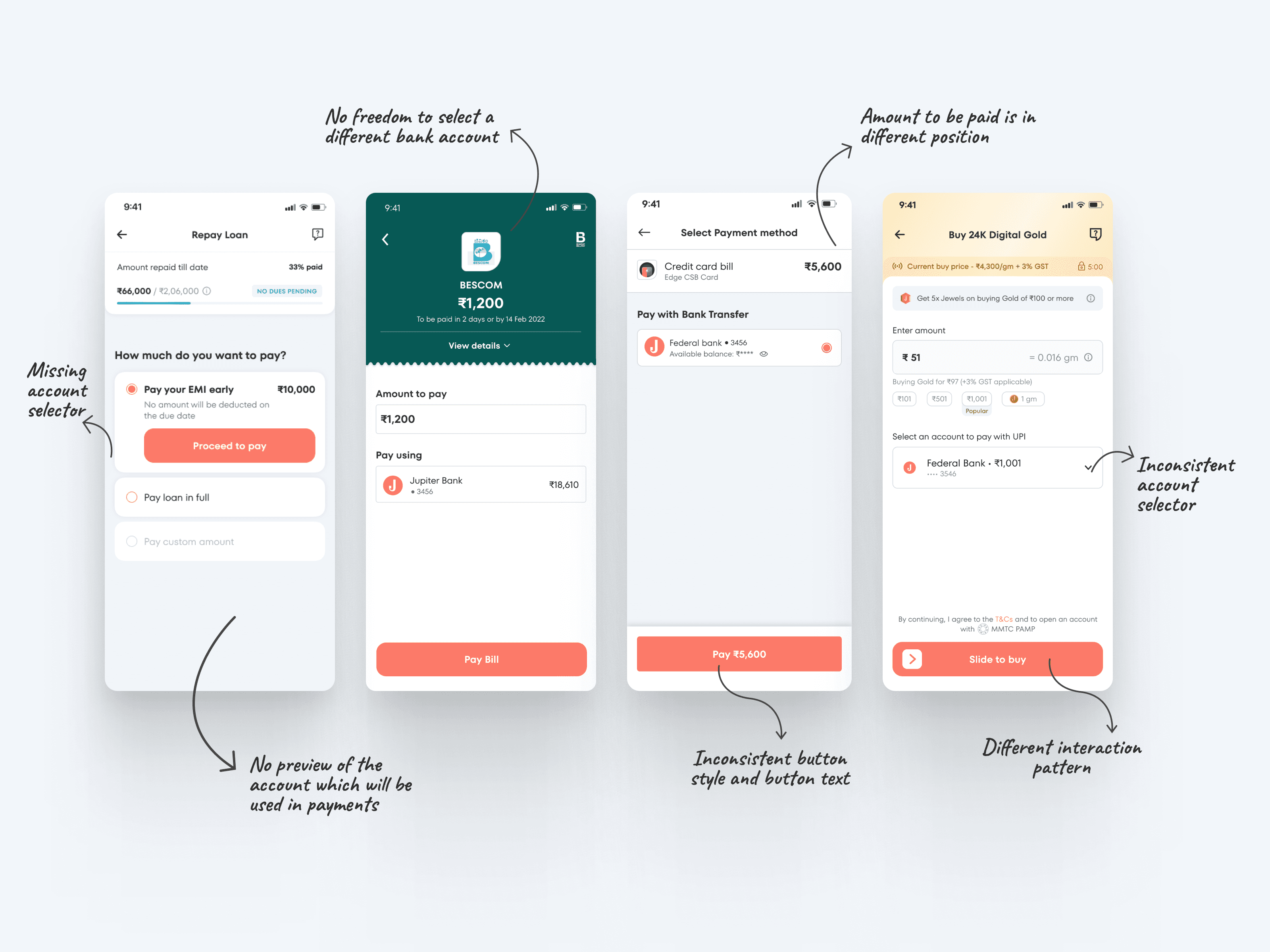
Jupiter handled dozens of payment journeys bill payments, EMIs, credit card dues, gold purchases, recharges, and more but each one used a completely different checkout layout. Amount fields behaved differently, UPI selection changed across screens, CTAs moved, and error states lacked consistency. This fragmentation increased cognitive load, broke trust, and made a core money action feel unpredictable.
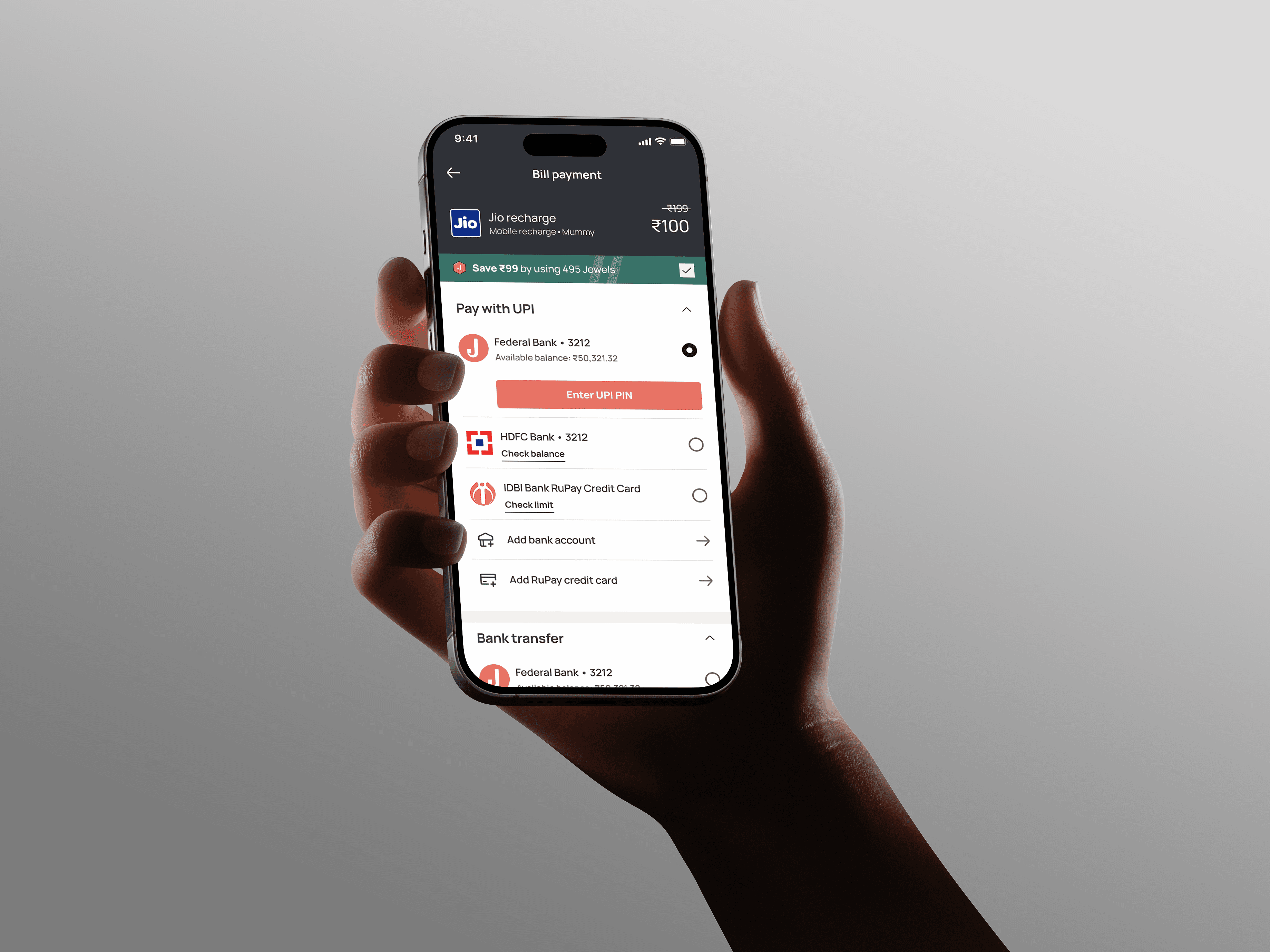
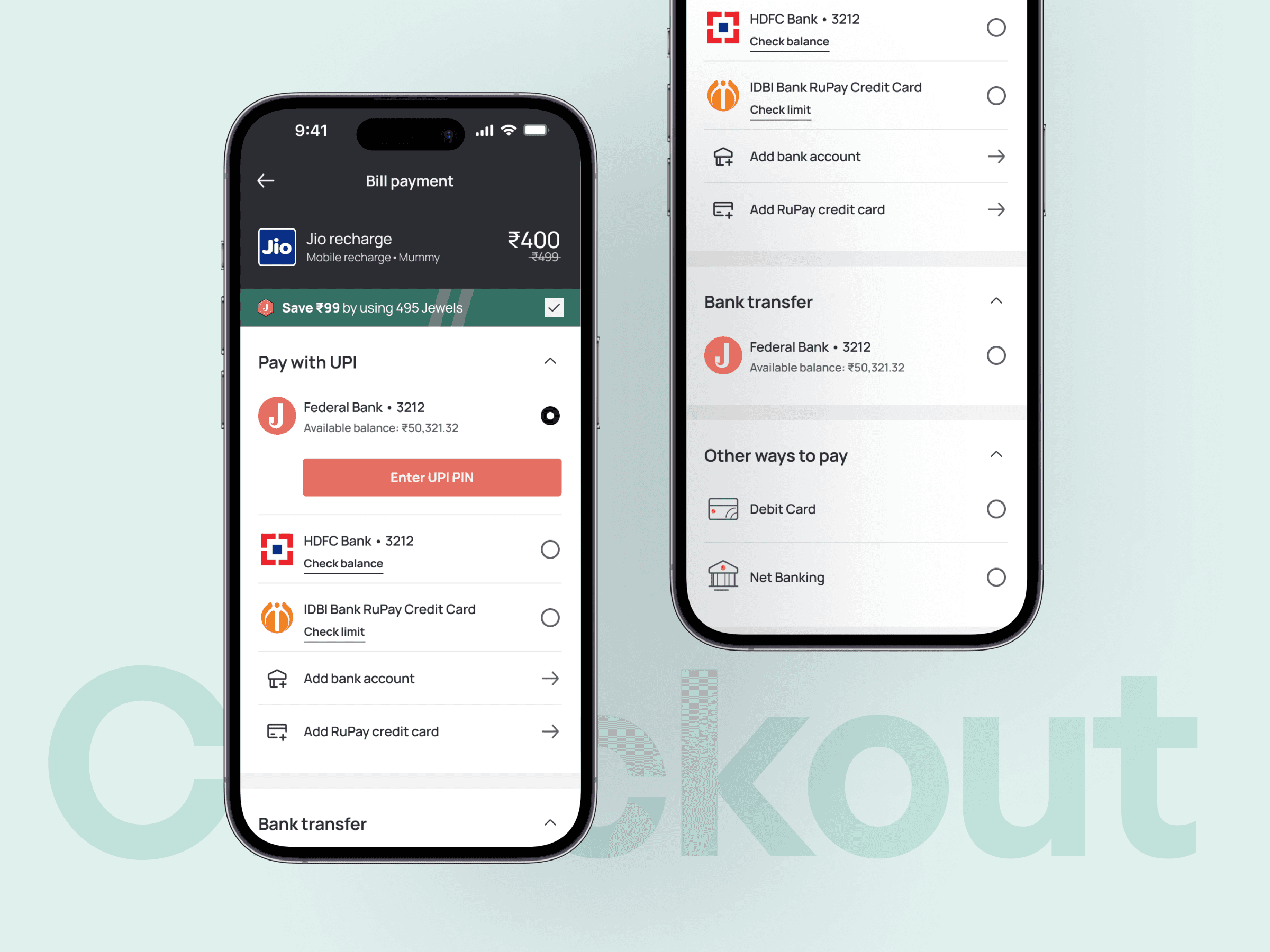
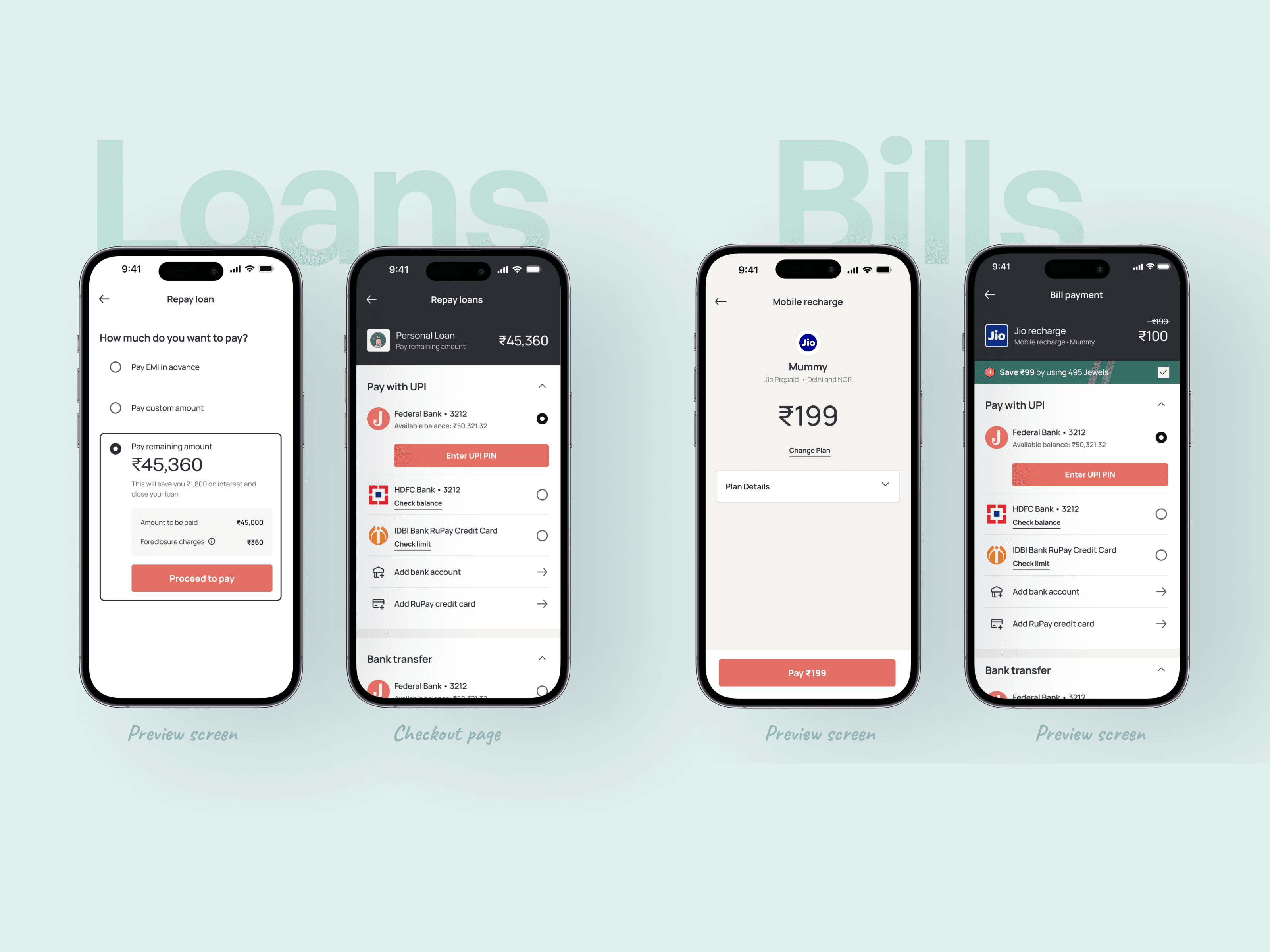
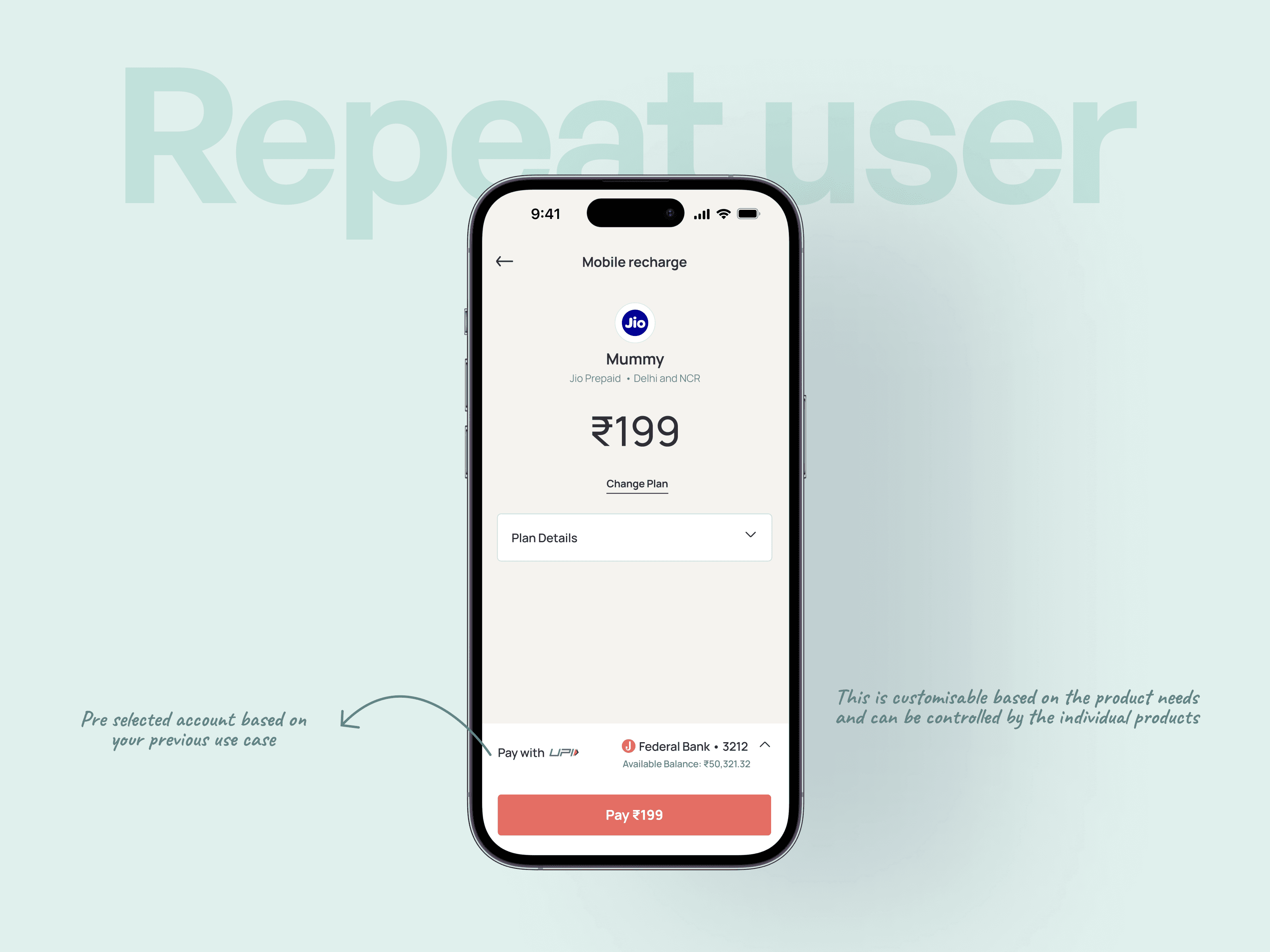
To fix this, we built one unified checkout system for the entire app, a single pattern, a single mental model, and a reusable component library. The result: a predictable, faster, trust-led payment experience powering every money flow on Jupiter.
Year
2024
Company
Jupiter
Role
Product designer 2
Year
2024
Company
Jupiter
40%
reduction in dev effort with unified checkout.
25%
faster product launches with a reusable checkout.
12%
average uplift in conversions across key transactions.
What I Owned
The Problem
I led the end-to-end redesign of Jupiter’s checkout system from identifying cross-flow inconsistencies to defining the new unified pattern, crafting reusable components, and collaborating with PM + engineering to ship it across all surfaces.
Checkout inconsistency: Every product team built its own version, leading to different layouts, behaviours, and patterns across flows.
Limited payment flexibility: Not all journeys supported the same payment methods or logic, creating unnecessary friction.
Fragmented systems: Offers, errors, UPI selection, amount entry, and CTAs behaved differently in each flow.
Lack of scalability: Multiple custom checkouts meant repeated design/dev work, slowing down launches of new products.
Checkout inconsistency: Every product team built its own version, leading to different layouts, behaviours, and patterns across flows.
Limited payment flexibility: Not all journeys supported the same payment methods or logic, creating unnecessary friction.
Fragmented systems: Offers, errors, UPI selection, amount entry, and CTAs behaved differently in each flow.
Lack of scalability: Multiple custom checkouts meant repeated design/dev work, slowing down launches of new products.
Solution
We aimed to reduce friction and drop-offs by creating one unified mental model for all payment flows. The goal was to lift trust and completion rates (10–15%), improve conversions across repayments, bill pay and investments (5–8%), and build a reusable checkout system that cuts engineering effort by 30–40% for future launches.
What I Owned
I led the end-to-end redesign of Jupiter’s checkout system from identifying cross-flow inconsistencies to defining the new unified pattern, crafting reusable components, and collaborating with PM + engineering to ship it across all surfaces.
The Problem
Checkout inconsistency: Every product team built its own version, leading to different layouts, behaviours, and patterns across flows.
Limited payment flexibility: Not all journeys supported the same payment methods or logic, creating unnecessary friction.
Fragmented systems: Offers, errors, UPI selection, amount entry, and CTAs behaved differently in each flow.
Lack of scalability: Multiple custom checkouts meant repeated design/dev work, slowing down launches of new products.
Success Criteria
To consider this redesign successful, we set these goals:
Reduce friction across all payment journeys → measured through faster completion times and fewer drop-offs.
Create a single mental model (amount → method → action) → validated through zero UX deviations across flows after rollout.
Increase trust & task completion rate → target +10–15% uplift in repayment and recharge completions.
Build a reusable, scalable checkout system → reduce engineering effort by 30–40% for new product launches.
Improve conversions across repayment, bill pay and investment flows → aim for 5–8% overall conversion lift post-standardisation.
Solution
We aimed to reduce friction and drop-offs by creating one unified mental model for all payment flows. The goal was to lift trust and completion rates (10–15%), improve conversions across repayments, bill pay and investments (5–8%), and build a reusable checkout system that cuts engineering effort by 30–40% for future launches.
Impact
40%
reduction in dev effort with unified checkout.
25%
faster product launches with a reusable checkout.
12%
average uplift in conversions across key transactions.
40%
reduction in dev effort with unified checkout.
40%
reduction in dev effort with unified checkout.
25%
faster product launches with a reusable checkout.
12%
average uplift in conversions across key transactions.
Impact
40%
reduction in dev effort with unified checkout.
25%
faster product launches with a reusable checkout.
12%
average uplift in conversions across key transactions.
Impact
40%
reduction in dev effort with unified checkout.
25%
faster product launches with a reusable checkout.
12%
average uplift in conversions across key transactions.